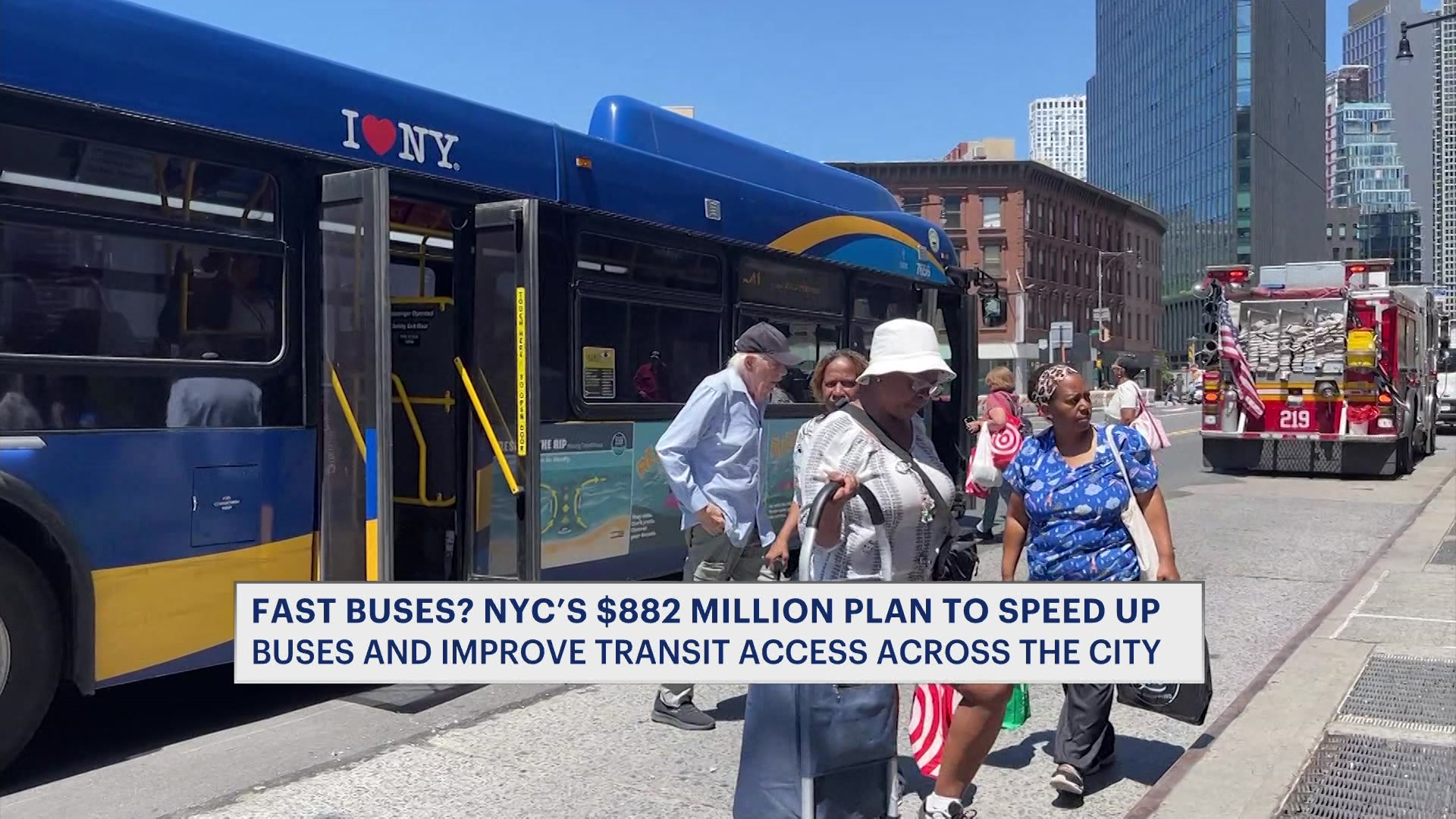
Fast buses? NYC’s $882 million plan to speed up buses and improve transit access
The plan calls for a 20% increase in bus speeds along 50 priority corridors citywide, including White Plains Road in the Bronx and Church Avenue in Brooklyn.
More Stories


New York City officials unveiled an ambitious plan aimed at making the city's bus system faster, more reliable and more accessible for riders across all five boroughs.
Mayor Zohran Mamdani and Gov. Kathy Hochul announced the administration's new "Next Stop" transit action plan in Fort Greene, Brooklyn, surrounded by transit advocates and city leaders.
The proposal seeks to address one of the system's biggest challenges - slow bus service. According to city officials, New York City buses currently travel at an average speed of just 8 mph, making them among the slowest in the country. The plan aims to save New Yorkers at least six minutes of their commute.
"Dozens of other routes across the five boroughs will receive dedicated rapid service and infrastructure improvements that finally put riders first," Mamdani said during the announcement.
The plan calls for a 20% increase in bus speeds along 50 priority corridors citywide, including White Plains Road in the Bronx and Church Avenue in Brooklyn.
Officials say the more than $880 million investment would fund dedicated bus lanes, expanded traffic-signal priority systems that allow buses to move more efficiently through intersections, and accessibility improvements at bus stops.
The initiative also includes upgrades designed to improve the rider experience, including seating, shelters and other amenities at bus stops.
"We want every single bus stop to be accessible, having seating at every single bus stop possible, shelter, trees — anything that makes the bus stop more comfortable," said Department of Transportation Commissioner Mike Flynn.
City officials said the improvements are intended to ensure that 90% of New Yorkers live within easy reach of public transit options.
Union raises concerns
While transit advocates praised the proposal, some transit workers voiced concerns about the plan and the process behind it. Members of TWU Local 100, which represents many of the city's bus and subway workers, rallied outside the news conference.
Union leaders said workers have been operating without a contract since May 16 and argued that employees should have a larger role in discussions about the future of the bus system.
"We don't have a contract, and when you talk about expanding a bus network, we feel there are other priorities and other stakeholders who should be present for these conversations," said Alexander Kemp, administrative vice president of TWU Local 100.
Union representatives criticized the event as a "photo op" and said bus operators have not been adequately consulted on changes that could affect their jobs and daily operations.
"We are the ones who should be considered first, that there are people being murdered on busses, that four weeks ago someone got shot in the stomach on a bus, and that is not their concern that somebody is getting slashed, and that is not their concern that transit workers feel unsafe, that the general public feels unsafe, and the council has a responsibility for public safety," said Kemp.
Questions remain on free buses
During his campaign, Mamdani pledged to pursue fare-free bus service. However, the newly announced transit plan focuses primarily on infrastructure and service improvements rather than eliminating fares.
While Mamdani vowed to continue to push for free buses, the future of it becoming reality remains uncertain, as MTA Chair and CEO Janno Lieber has previously expressed his reservations.
"Not everybody agrees about everything. We do agree about affordability," Lieber said.
What's next?
The city plans to begin rolling out some improvements in the coming years, with all-door boarding and additional bus-lane enforcement cameras expected to launch in 2027, universal bus stop seating by 2035 and the installation of 2,900 new real-time passenger information signs.
Officials also said they will host public workshops to gather feedback from residents as the initiative moves forward.
The administration says the plan is intended to create a faster, more reliable bus network for millions of New Yorkers who rely on public transit every day