Summer begins this Sunday with over 15 hours of daylight for Father’s Day
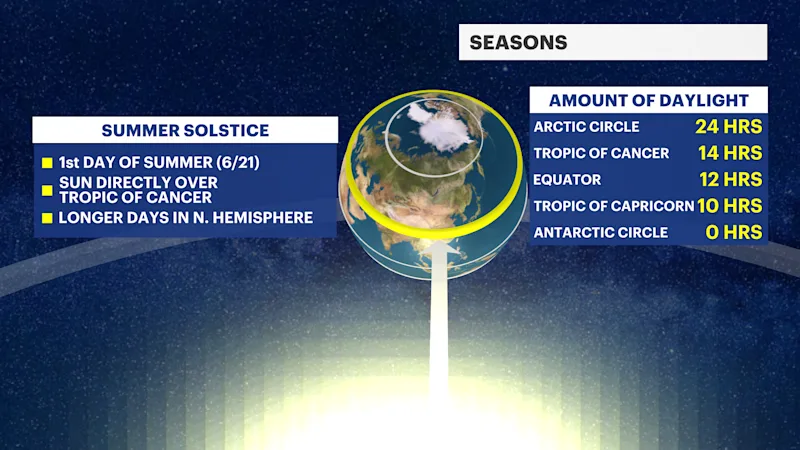
Astronomical summer begins this weekend with the summer solstice. It’s the longest day of the year with just over 15 hours of daylight. It’s happening on Sunday, June 21.
More Stories


Astronomical summer begins this weekend with the summer solstice. It’s the longest day of the year with just over 15 hours of daylight. It’s happening on Sunday, June 21, for Father’s Day.
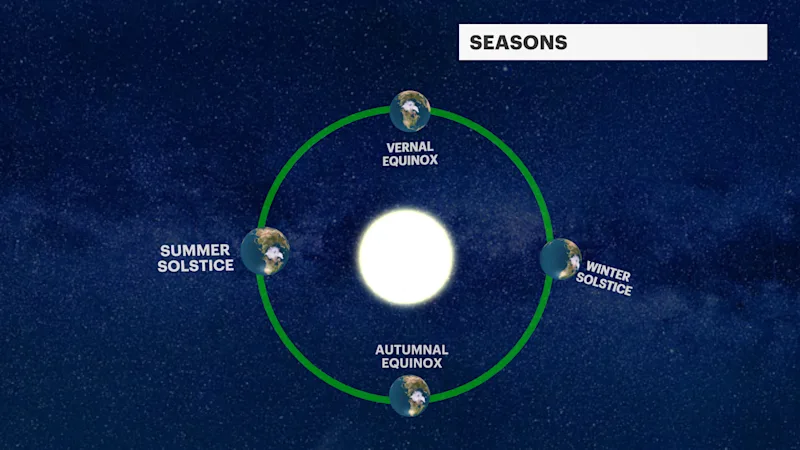
Earth is now at the point in its orbit where the northern hemisphere is tilted toward the sun. The sun is directly overhead the Tropic of Cancer at noontime, which is its northernmost point that it ever reaches in the sky.
The word solstice comes from the Latin for “sun standing still.” The sun has been climbing higher and higher in our sky since the winter solstice six months ago. The sun will appear to “stand still” on Sunday, then begin to slide back southward toward the Equator for the equinox and then onto the Tropic of Capricorn on the winter solstice. That also means the days from this point on will be getting shorter.
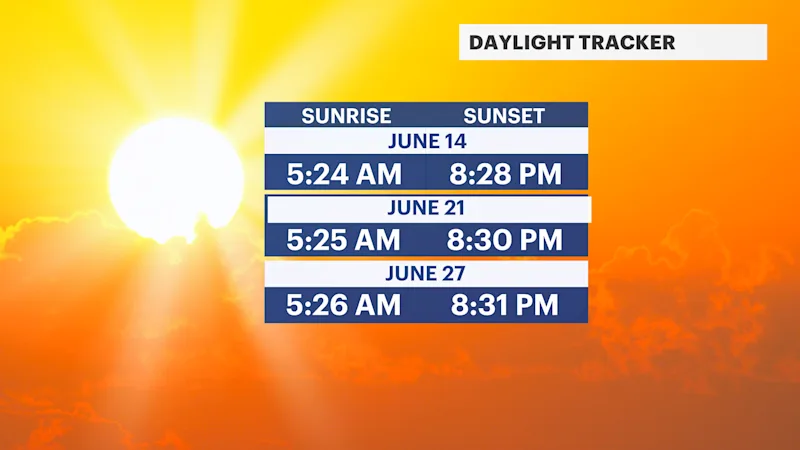
Sunrise and sunset times vary with latitude, but the earliest sunrise comes about a week before the solstice for most of us, on or near June 12-14. The latest sunset also occurs about a week after, near June 27.
We see differences like this because of our 23.5-degree axial tilt and the fact that the orbit is an ellipse. The slightly elliptical orbit means the Earth travels more slowly or faster at different points in the orbit. In the winter, the latest sunrise and earliest sunset times are two weeks on either side of the solstice